
Is an Amsterdam Canal Cruise Worth It?
Yes — for most first-time visitors, an Amsterdam canal cruise is worth it. It gives you a perspective of the historic Canal Ring that walking alone cannot fully reproduce, while allowing you to see a…
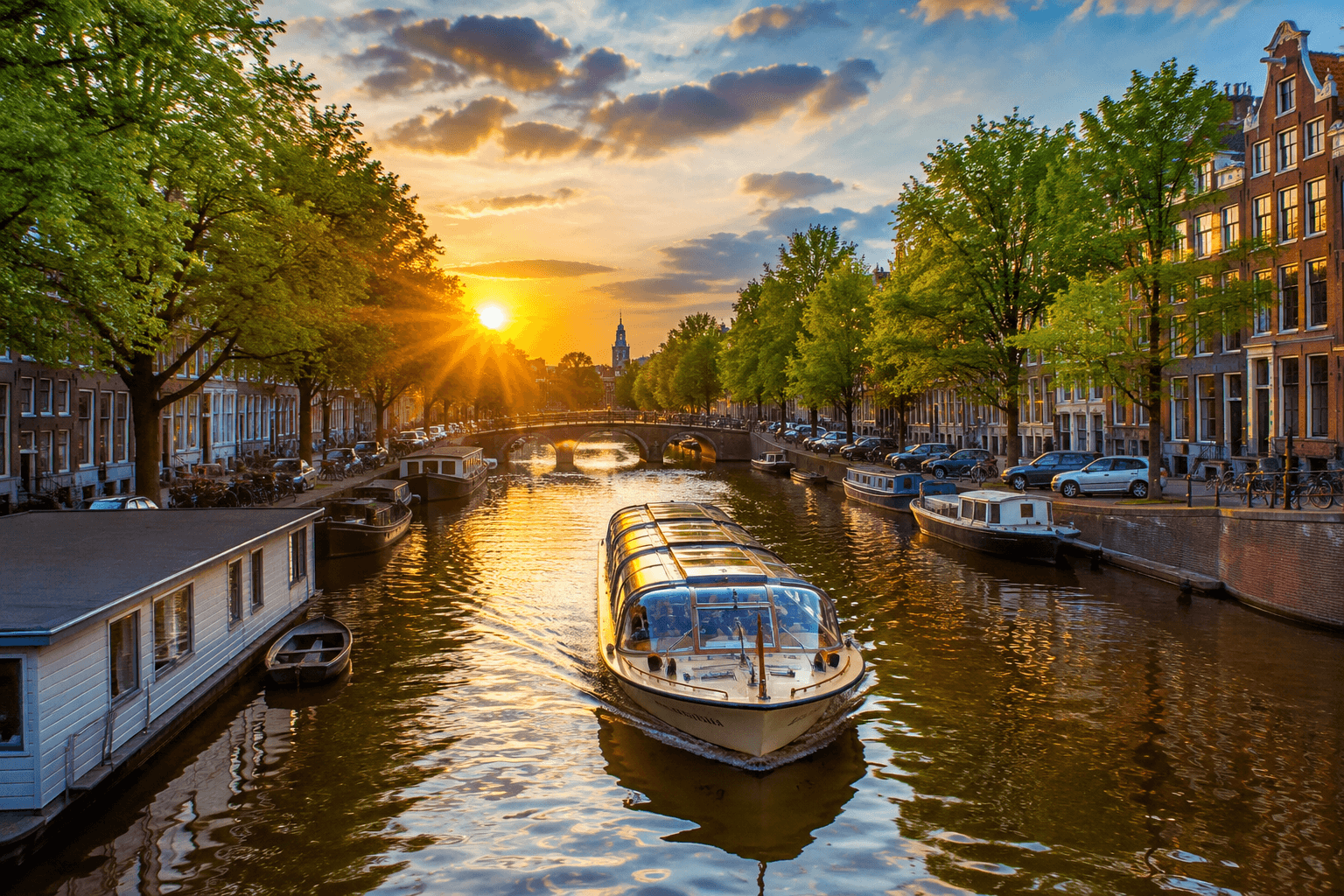
Quick Answer
Tourist Attraction or Amsterdam Essential? Here’s Who Should Actually Book One.
Yes — for most first-time visitors, an Amsterdam canal cruise is worth it. It gives you a perspective of the historic Canal Ring that walking alone cannot fully reproduce, while allowing you to see a substantial part of central Amsterdam in around an hour.
Amsterdam's seventeenth-century Canal Ring is a UNESCO World Heritage Site, recognized for its exceptional urban planning, hydraulic engineering and distinctive architecture. The canals weren't added simply for decoration; they helped shape the Amsterdam we see today.
A cruise lets you experience that city from water level: narrow canal houses rise above you, bridges frame the view and entire rows of historic façades become visible from a different angle.
But there is an important catch:
The cruise you choose matters.
A small open boat with a live guide can feel completely different from a larger covered sightseeing boat with recorded commentary.
So the better question is:
Which Amsterdam canal cruise will be worth it for you?
Amsterdam Canal Cruise: Quick Verdict
Traveller | Worth It? | Our Choice |
|---|---|---|
First-time visitor | ⭐⭐⭐⭐⭐ | Classic sightseeing cruise |
Couple | ⭐⭐⭐⭐⭐ | Small boat or evening cruise |
Family | ⭐⭐⭐⭐⭐ | Covered sightseeing cruise |
One-day visitor | ⭐⭐⭐⭐⭐ | 60–75 minute cruise |
History lover | ⭐⭐⭐⭐⭐ | Live guide or good audio guide |
Good-weather visitor | ⭐⭐⭐⭐⭐ | Open boat |
Rain/cold weather | ⭐⭐⭐⭐ | Covered/heated boat |
Returning visitor | ⭐⭐⭐⭐ | Small, open or specialty cruise |
Very tight budget | ⭐⭐⭐ | Walk the Canal Ring instead |
Our verdict
For a first visit to Amsterdam, we'd put a canal cruise high on the itinerary.
If you've already visited Amsterdam several times, we'd still consider cruising—but choose a smaller, evening or specialty experience rather than simply repeating the standard sightseeing boat.
Why Is an Amsterdam Canal Cruise Worth It?
1. You Understand Amsterdam Better From the Water
This is the biggest reason we'd recommend taking one.
Amsterdam's canals are part of the city's structure.
UNESCO describes the historic Canal District as a major planned expansion built using concentric canals, streets, merchant houses and warehouses. Four principal canals structure the historic city: Herengracht, Keizersgracht, Prinsengracht and Singelgracht.
Walking lets you explore individual streets beautifully.
A boat gives you something different: a continuous view of how the waterways, bridges and buildings connect.
You begin noticing the relationship between the canal houses, bridges, houseboats, former warehouses and waterfront streets, rather than seeing each one separately.
That's why we'd ideally take the cruise relatively early in a first Amsterdam visit. It gives you context for what you'll explore later on foot.
2. The View Is Genuinely Different From Walking
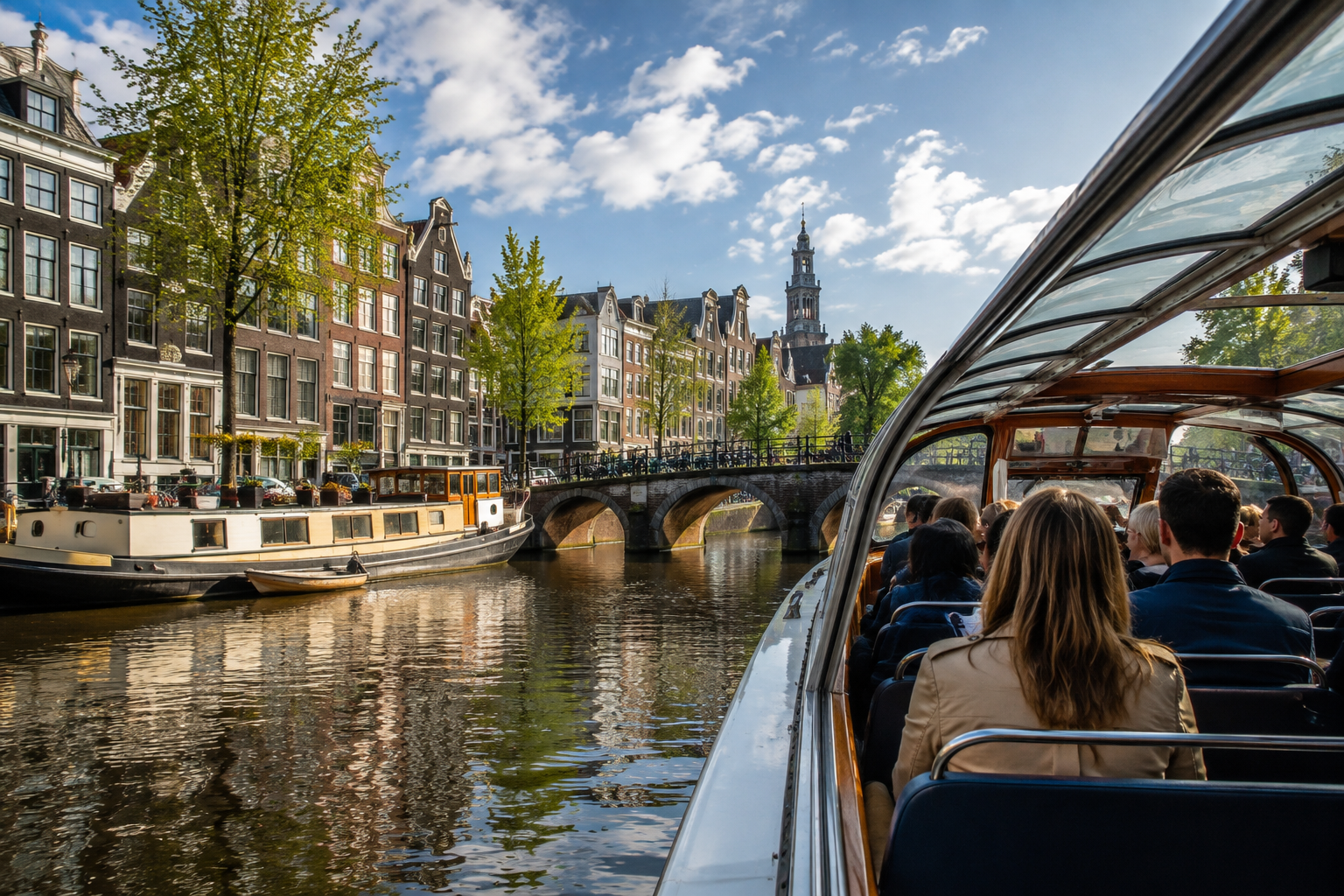
On a canal cruise, you're sitting below street level.
That changes the view considerably.
The canal houses appear taller, bridges pass directly overhead and rows of façades line up along the water. You also avoid some of the bicycles, traffic and crowds that naturally form part of exploring Amsterdam at street level.
This doesn't mean a cruise is better than walking.
They're complementary.
Cruise: better for seeing Amsterdam as a water city.
Walking: better for stopping, exploring streets, cafés, shops and architectural details.
If you have time, we'd do both.
3. You See a Lot Without Spending Hours on Your Feet
Amsterdam is compact, but sightseeing can still involve a surprising amount of walking.
A day combining museums, Jordaan, the historic centre and the Canal Ring can quickly become tiring.
A canal cruise gives you a chance to sit down without actually stopping your sightseeing.
Amsterdam's official tourism information says a typical canal cruise takes approximately 60–75 minutes.
That's a very manageable amount of time for most itineraries.
It's particularly useful for:
first-time visitors, short city breaks, families, older travellers and anyone wanting a quieter hour between major attractions.
4. The Canals Themselves Are the Attraction
One mistake is judging an Amsterdam canal cruise only by the number of famous landmarks it passes.
The Canal Ring itself is one of Amsterdam's major sights.
UNESCO considers the historic Canal District an outstanding example of large-scale town planning and hydraulic engineering, and the district became a model for urban development elsewhere.
So you're not simply using a boat to travel past attractions.
You're travelling through part of the attraction itself.
The historic canal houses, merchant architecture, bridges and waterways are what make the experience distinctive.
That also means you shouldn't reject a cruise simply because it doesn't pass every landmark on your Amsterdam wish list.
5. It Doesn't Take Over Your Day
A standard canal cruise is one of the easier paid attractions to fit into an Amsterdam itinerary.
Most sightseeing cruises last around 60–75 minutes, meaning you can comfortably combine one with museums, neighbourhoods and walking sightseeing on the same day.
For example, you could visit the Rijksmuseum or Museumplein in the morning, explore the Jordaan and historic centre in the afternoon, and take a canal cruise before dinner.
Another option is to combine a cruise with time around the Anne Frank House area and Jordaan, particularly when your selected cruise departs nearby.
This makes a canal cruise especially practical if you only have one or two days in Amsterdam. Instead of replacing other sightseeing, it adds another perspective without requiring half your day.
Is an Amsterdam Canal Cruise Too Touristy?
Yes, canal cruises are touristy. But that doesn't automatically make them a tourist trap.
There's an important difference.
Canal cruises are popular with visitors because Amsterdam genuinely developed around its waterways. The underlying attraction—the historic canals—is authentic even though sightseeing boats are primarily designed for tourists.
What can make a cruise feel like a tourist trap is choosing the wrong experience.
A large covered boat may disappoint someone expecting an intimate experience.
An open boat can be a poor choice on a cold, rainy day.
A drinks cruise may disappoint someone expecting detailed historical commentary.
And the cheapest ticket isn't necessarily the best value if the boat type or experience doesn't suit you.
So we'd focus less on whether canal cruises are “touristy” and more on choosing the right cruise.
Which Type of Amsterdam Canal Cruise Is Most Worth It?
There isn't one best cruise for everybody.
Classic Covered Sightseeing Cruise
Best for: First-time visitors, families and uncertain weather.
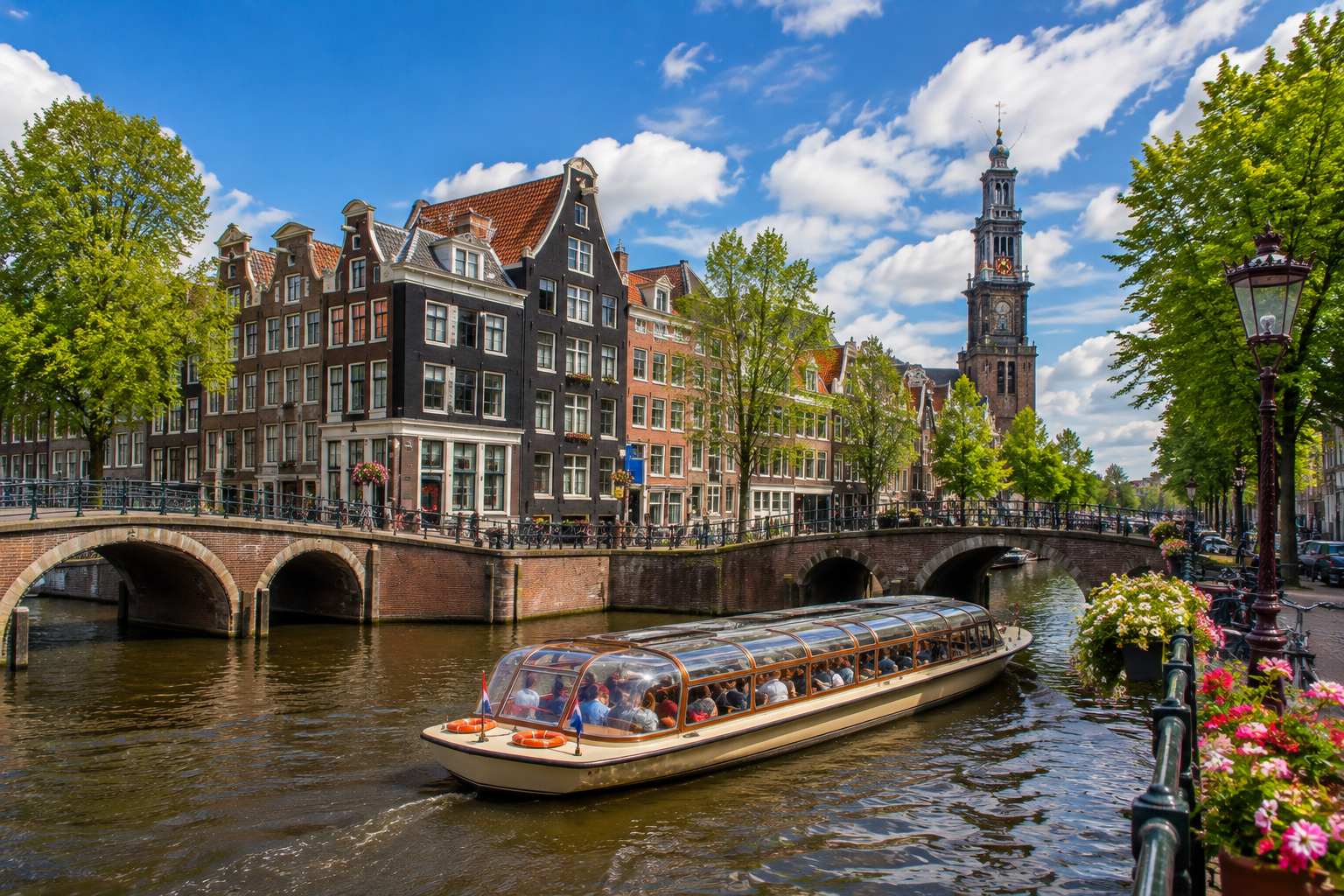
This is the safest all-round option.
You get the classic Amsterdam canal experience, usually with commentary, without depending heavily on good weather.
If it's your first visit and you're unsure which cruise to choose, this is where we'd start.
Not sure which option fits your trip? See our comparison of the best Amsterdam canal cruise types for first-time visitors, couples, families and different weather conditions.
Small Open Boat Cruise
Best for: Good weather, photography, couples and travellers wanting a more intimate experience.
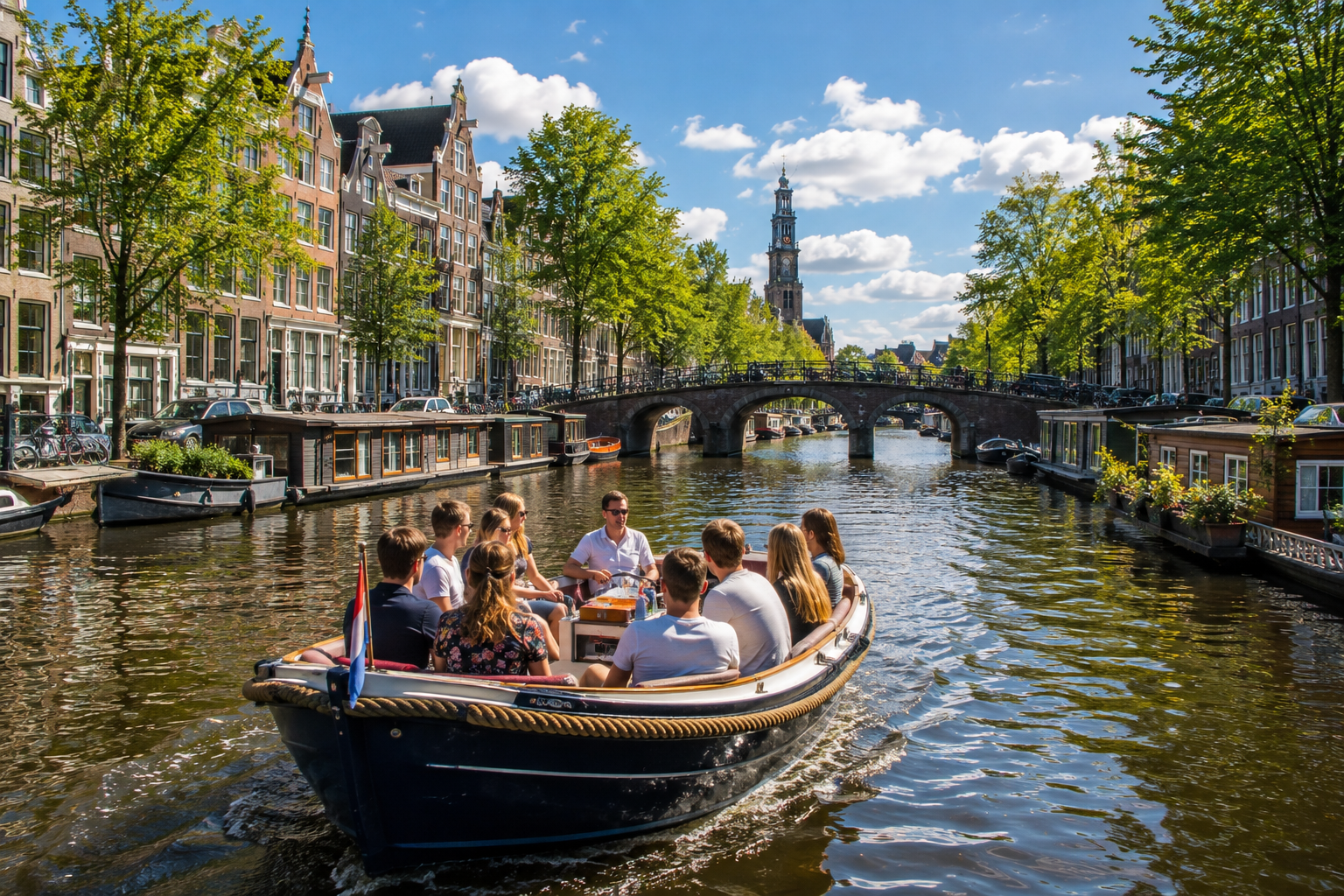
An open boat removes the glass between you and Amsterdam.
That can improve views, photography and the feeling of being close to the canals.
The downside is obvious: weather matters much more.
Warm and dry? We'd seriously consider open.
Cold and rainy? Covered wins.
Live-Guided Canal Cruise
Best for: History, stories and interaction.
A good live guide can turn buildings you'd otherwise pass without noticing into interesting parts of Amsterdam's story.
For visitors who enjoy learning about a destination, we'd often choose this over recorded commentary.
Just remember that guide quality naturally varies.
Evening Canal Cruise
Best for: Couples, atmosphere and repeat visitors.
Amsterdam feels different once the lights and reflections become part of the view.
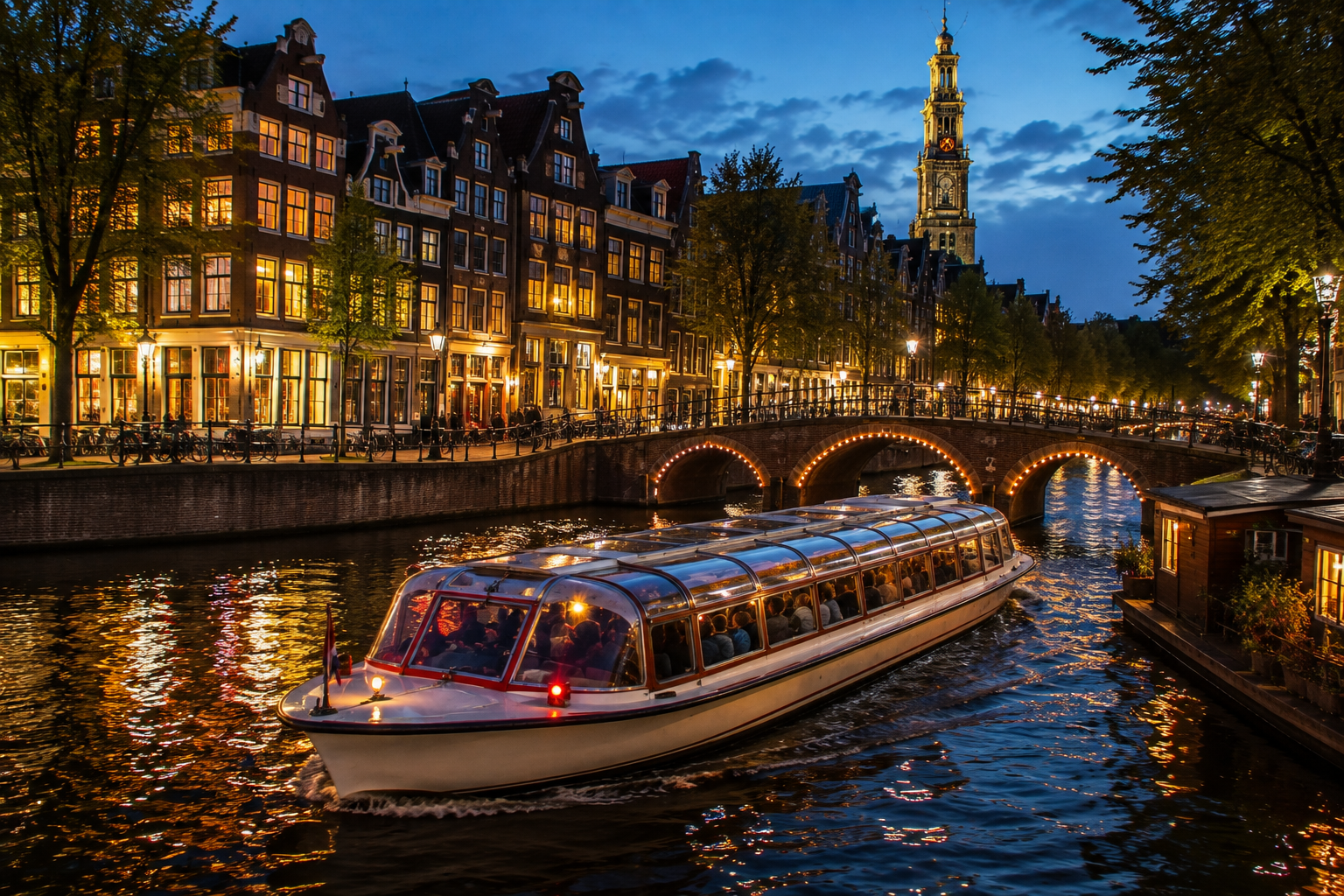
The trade-off is that daylight makes architectural details easier to see.
For a first cruise, we'd generally lean toward daylight if understanding Amsterdam is the priority.
For atmosphere or romance, evening becomes much more appealing.
Drinks or Specialty Cruise
Best for: Friends, couples and travellers who want the boat ride to be part of the entertainment.
These can be great experiences, but decide what you actually want:
Sightseeing?
or
Social atmosphere?
If you're visiting Amsterdam for the first time and taking only one cruise, we'd prioritize the quality of the sightseeing experience before extras.
What Will You Actually See?
There is no single route used by every Amsterdam canal cruise.
Exact waterways can vary according to the operator, departure point, boat, canal traffic and operating conditions.
Depending on your cruise, you may see sections of the historic Canal Ring and waterways around:
Herengracht
Keizersgracht
Prinsengracht
Jordaan
the Amstel
along with historic canal houses, houseboats, bridges and former merchant buildings.
UNESCO identifies the major concentric canals as fundamental elements of Amsterdam's historic urban structure.
Our advice is simple:
Check the route advertised for the cruise you're actually booking.
Don't assume every Amsterdam canal cruise follows exactly the same path.
For a closer look at the landmarks and neighbourhoods along the route, see what you can see on an Amsterdam canal cruise.
Is a Canal Cruise Worth It If You've Already Walked the Canals?
Yes.
Walking the Canal Ring doesn't make the boat experience redundant.
Walking is better for exploring slowly. You can stop for photographs, cross bridges, enter shops, visit cafés and wander down side streets.
The cruise gives you the continuous water-level perspective that walking doesn't.
If possible:
Cruise first, walk afterward.
The cruise gives you an overview.
Walking lets you return to the areas that interested you most.
Is an Amsterdam Canal Cruise Worth It for Couples?
Yes—particularly if you choose the boat carefully.
For couples, we'd look beyond the basic cheapest sightseeing ticket and consider:
small-group cruises
open boats in good weather
or
evening cruises.
Boat size and atmosphere can matter more here than simply adding another 15 minutes to the cruise duration.
If romance is the priority, we'd usually choose smaller and more atmospheric over bigger and cheaper.
Is an Amsterdam Canal Cruise Worth It for Families?
Usually, yes.
A cruise gives children and parents a break from walking while the family continues seeing Amsterdam.
For most families we'd prioritize:
covered seating
a convenient departure point
around one hour on the water
and
straightforward commentary.
A classic covered sightseeing cruise is usually the simplest option.
If you're travelling with a stroller or require step-free access, check the accessibility details of the specific boat before booking. Boats and boarding arrangements differ between operators.
Is an Amsterdam Canal Cruise Worth It in the Rain?
Yes—if you're on the right boat.
Rain doesn't automatically ruin a canal cruise.
A covered or glass-roof boat can actually be an attractive sightseeing option when walking around Amsterdam becomes less pleasant.
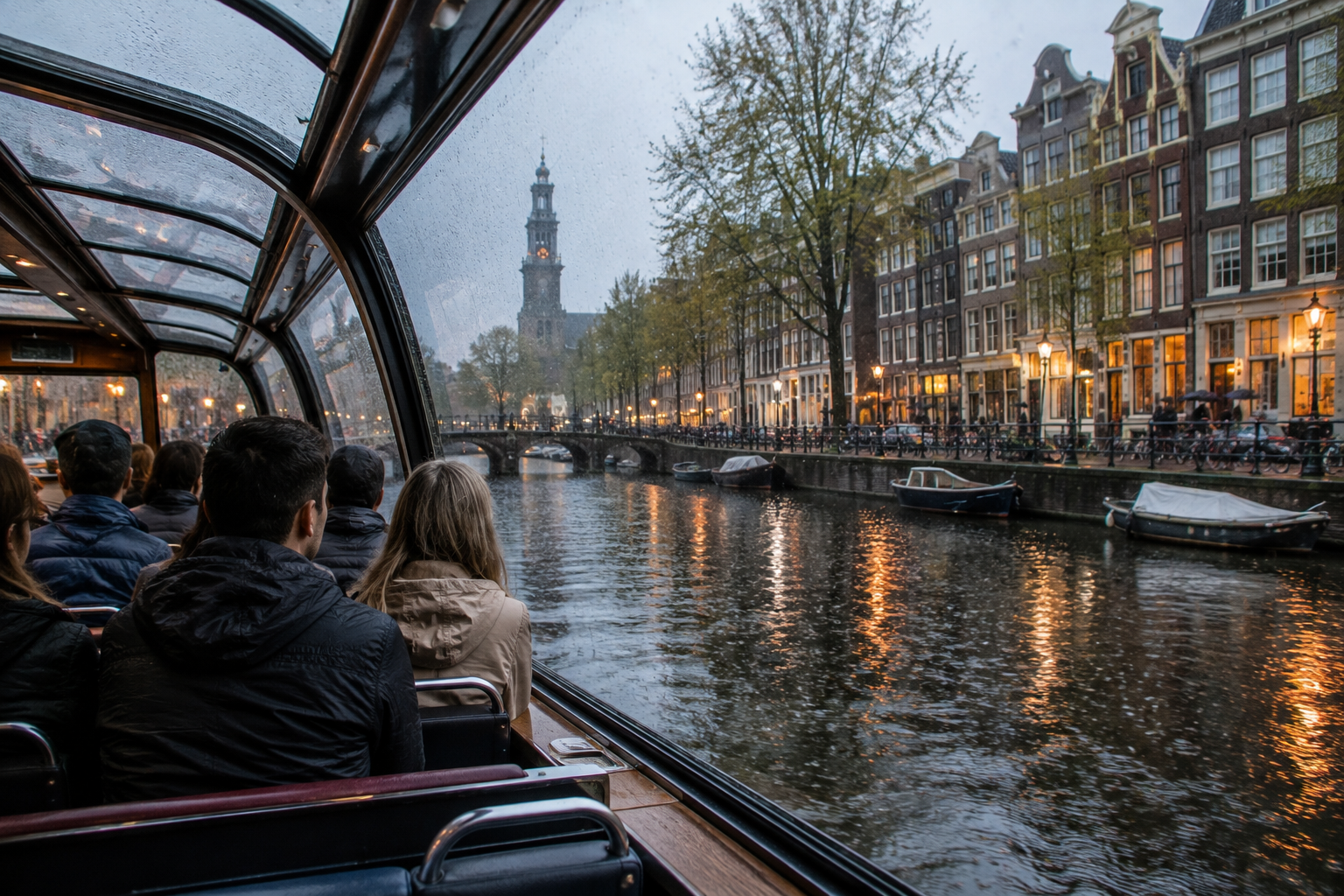
Amsterdam's official tourism information notes that canal cruise boats included with its City Card have heating during winter.
An open boat is obviously a different proposition.
If rain is likely, check the specific product for:
covered seating, heating and weather/cancellation conditions.
Don't assume all boats are the same.
Is an Amsterdam Canal Cruise Worth It in Winter?
Yes, but we'd choose covered.
Winter changes the experience rather than eliminating it.
You'll have:
shorter daylight
colder temperatures
but also
earlier evening atmosphere and fewer reasons to choose an open boat.
A heated covered boat is the sensible choice for most winter visitors.
And during seasonal events such as the Amsterdam Light Festival, dedicated cruises become a separate experience from the standard sightseeing cruise.
What Are the Downsides?
A useful guide shouldn't pretend there aren't any.
1. You can't stop when something interests you
The boat follows its route. Walking offers far more flexibility.
2. Large boats can feel less personal
They're efficient and weather-protected, but they won't have the atmosphere of every small-group cruise.
3. Glass can affect photography
Reflections or condensation can occasionally interfere with photographs on covered boats.
4. Routes vary
Don't assume every cruise passes every landmark you've seen in an advertisement or social-media video.
5. Popular departures can feel busy
Canal cruising is one of Amsterdam's signature visitor activities. You're unlikely to have the canals to yourself.
None of these would stop us taking a cruise.
They simply influence which one we'd book.
When Is an Amsterdam Canal Cruise Not Worth It?
We wouldn't tell every visitor that they must take one.
Consider skipping it if:
Your budget is extremely tight. Walking the Canal Ring is free and still one of the best ways to experience Amsterdam.
You strongly dislike organized sightseeing. Even a small boat follows a fixed route and schedule.
You're expecting it to replace exploring Amsterdam on foot. It won't. The two experiences serve different purposes.
You're choosing solely on price. A very cheap cruise isn't good value if you dislike the boat type, commentary or departure location.
You're booking an open boat despite poor weather. Choosing the wrong boat can turn an otherwise good experience into an uncomfortable one.
How Much Time Should You Allow?
A typical Amsterdam canal cruise takes around 60–75 minutes.
But don't schedule only the advertised sailing time.
You'll also need time to:
find the departure point → check in → board → cruise → disembark → reach your next attraction.
For a standard one-hour cruise, we'd keep approximately 1½ hours available in your itinerary.
Leave more time if your next attraction has strict timed entry.
Canal Cruise vs Walking: Which Is Better?
Neither wins outright.
Canal Cruise | Walking | |
|---|---|---|
Water-level perspective | ⭐⭐⭐⭐⭐ | ⭐⭐ |
Architectural details | ⭐⭐⭐⭐ | ⭐⭐⭐⭐⭐ |
Flexibility | ⭐⭐ | ⭐⭐⭐⭐⭐ |
Rest while sightseeing | ⭐⭐⭐⭐⭐ | ⭐ |
Side streets & cafés | ⭐ | ⭐⭐⭐⭐⭐ |
Understanding the waterways | ⭐⭐⭐⭐⭐ | ⭐⭐⭐ |
Cost | Paid | Free |
Our recommendation: do both if you can.
The cruise helps you see Amsterdam as a city built around water.
Walking lets you explore that city in detail.
So, Is an Amsterdam Canal Cruise Worth the Money?
For most first-time visitors, yes.
A canal cruise combines several things particularly well:
a UNESCO-listed historic setting
a perspective you cannot fully reproduce from the street
roughly an hour of sightseeing
a break from walking
and
an easy way to understand Amsterdam's relationship with its waterways.
The main mistake isn't taking a canal cruise.
It's assuming all canal cruises offer the same experience.
Boat type, group size, commentary, weather, departure point and time of day can all affect whether the experience feels average or memorable.
Our Recommendation
First visit to Amsterdam
Choose a classic sightseeing cruise or live-guided cruise.
Good weather
Consider a small open boat.
Couple
Consider a small-group or evening cruise.
Family
Choose a covered sightseeing boat.
Rain or cold
Choose covered and weather-protected.
Returning visitor
Try a smaller, evening or specialty cruise rather than automatically repeating the standard experience.
For most first-time visitors taking only one cruise, we'd prioritize good sightseeing, a suitable boat and useful commentary over simply choosing the cheapest or longest option.
Frequently Asked Questions
Is an Amsterdam canal cruise really worth it?
Yes, particularly for first-time visitors. A canal cruise gives you a water-level perspective of Amsterdam's historic Canal Ring and architecture that you cannot fully experience from the street.
Is an Amsterdam canal cruise a tourist trap?
Not inherently. Canal cruises are tourist-oriented, but they're built around Amsterdam's genuine historic waterways and UNESCO-listed Canal Ring. The quality of the experience depends heavily on the cruise you choose.
How long does an Amsterdam canal cruise take?
A typical canal cruise takes approximately 60–75 minutes, according to Amsterdam's official tourism information.
Is an Amsterdam canal cruise worth it at night?
Yes if atmosphere is your priority. Daylight generally makes architecture easier to appreciate, while evening cruises emphasize lights, reflections and ambience.
Is an Amsterdam canal cruise worth it in the rain?
Yes, provided you choose a covered boat. Check the specific cruise before booking because boat designs and weather protection vary.
Which canal cruise is best for a first visit to Amsterdam?
For most first-time visitors, we'd choose a classic sightseeing cruise or a live-guided canal cruise. Covered boats are the safest all-weather option; small open boats can offer a more intimate experience when conditions are good.
Is an Amsterdam canal cruise worth it with children?
Usually, yes. It allows families to continue sightseeing while taking a break from walking. Check the specific operator's stroller, boarding and accessibility rules beforehand.
Should I take a canal cruise or walk around Amsterdam?
Ideally, do both. A canal cruise is better for understanding Amsterdam from water level, while walking gives you more freedom to explore streets, bridges, cafés and individual buildings.
Ready to book?
Compare cruise prices and tickets on the homepage.